
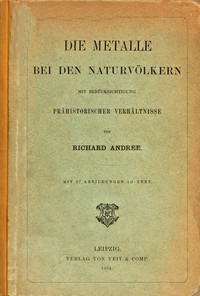
Die Metalle bei den Naturvölkern : Mit Berücksichtigung prähistorischer…
Forget the lone inventor. Richard Andree's 1890s work argues that the story of metal is a global, collective one. He gathers reports from missionaries, colonial officers, and early anthropologists who documented how people from the Americas to Africa to the Pacific islands used metals. The book isn't a single narrative, but a massive comparison. Andree looks at mining techniques, smelting methods, and the cultural meanings of metals across dozens of societies. He then uses this global snapshot to make educated guesses about what prehistoric life in Europe might have been like, suggesting that our ancient ancestors learned in similar, scattered ways.
Why You Should Read It
This book flips the script on how we think about technology. It shows innovation as a slow, shared process, not a sudden 'Eureka!' moment in one place. Reading it feels like sitting with a brilliant, slightly obsessive 19th-century scholar who has laid out his entire card catalog of knowledge on the table for you. You get a real sense of the awe those early observers felt when they described metalworking rituals they didn't fully understand. The book's value is in its grand, early attempt to see human history as connected, long before that was a common idea.
Final Verdict
This is a specialist's book, but with wide appeal for the right reader. It's perfect for history buffs who enjoy primary sources and want to see the roots of modern anthropology. It's also great for anyone interested in the history of technology, as it strips away modern assumptions to show how foundational skills actually develop. Be warned: it's a scholarly work of its time, so the prose is formal and the terminology dated. But if you're patient, it offers a unique and humbling window into the everyday genius of ancient peoples worldwide.
This work has been identified as being free of known copyright restrictions. Use this text in your own projects freely.
Nancy Thomas
1 year agoBeautifully written.
Donald Hill
11 months agoAfter finishing this book, it manages to explain difficult concepts in plain English. I would gladly recommend this title.



Andrew Wilson
2 years agoI have to admit, the narrative structure is incredibly compelling. Worth every second.