
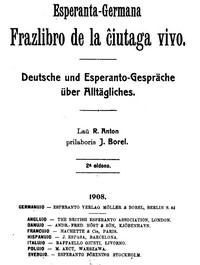
Esperanto-Germana frazlibro de la ĉiutaga vivo by R. Anton and J. Borel
Forget dry vocabulary lists. This 1908 phrasebook, 'Esperanto-Germana frazlibro de la ĉiutaga vivo' (Esperanto-German Phrasebook of Daily Life), is a direct line to the past. It was created by Jean Borel and R. Anton not just to teach phrases, but to equip Esperanto speakers with the actual language of everyday interaction in the early 1900s.
The Story
There's no fictional plot, but the 'story' is in the conversations it teaches. The book is organized by scenarios: traveling by train, staying at a hotel, visiting a doctor, or discussing business. You learn how to ask for a timetable, complain about a drafty room, or describe symptoms to a pharmacist. It captures the rhythm of life from booking a telegram to making casual conversation at the dinner table.
Why You Should Read It
The magic is in the details. You see what mattered to people—concerns about health, the cost of postage, the formality of address. It presents Esperanto not as a theoretical ideal, but as a living tool for real people. Reading it, you feel the optimistic spirit of the early Esperanto movement, a genuine attempt to build bridges in a world still dominated by empires and nationalism.
Final Verdict
This is a niche treasure, but a delightful one. It's perfect for history lovers, language nerds, and anyone curious about social history. If you've ever studied Esperanto, it's a fascinating primary source. For everyone else, it's a unique and accessible peek into the hopes and daily realities of a bygone era, proving that phrasebooks can be some of the most human documents we have.
You are viewing a work that belongs to the global public domain. Use this text in your own projects freely.
Donna Harris
1 year agoSolid story.
Dorothy Perez
8 months agoFinally a version with clear text and no errors.

Ava Flores
1 year agoThis book was worth my time since it manages to explain difficult concepts in plain English. Exactly what I needed.