T
The HelpHouse Crew
Guest
- Thread Author
- #1
A winter power outage can be much more than an inconvenience. When temperatures are freezing, losing electricity can also mean losing your home’s heating system, dealing with frozen pipes, losing food, and facing potentially dangerous conditions inside the house.
Winter storms can knock out power because of heavy snow, ice, high winds, falling trees, and damage to electrical equipment. Preparing before the storm arrives gives you more options if the lights go out and the temperature starts dropping.
The best time to prepare for a winter power outage is before you need to.
Here’s how to get your home ready, protect your plumbing and heating system, use backup equipment safely, and know what to do if the power actually goes out.
A power outage during mild weather may be inconvenient, but a winter outage can create additional problems.
If the power remains off long enough for your home to become very cold, plumbing can freeze. A frozen pipe can eventually burst, potentially causing significant water damage when it thaws.
You may also lose your furnace or heat pump, depending on how your heating system operates. Electric space heaters won’t work without electricity, and fuel-burning equipment can create serious carbon-monoxide and fire hazards if used incorrectly.
Winter outages can also affect:
The CDC recommends preparing your home and supplies before winter storms because they can bring power failures, loss of communications, dangerous cold, and difficult travel conditions.
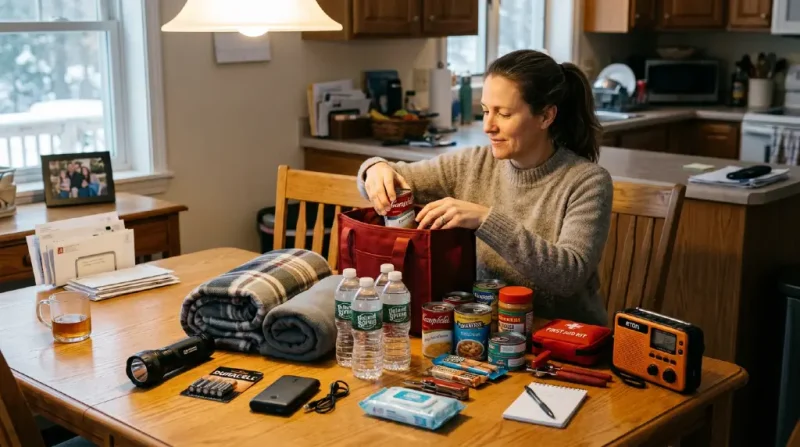
A well-stocked emergency kit can make a winter power outage much easier to manage.
Don’t wait until a winter storm is approaching to discover that your flashlights don’t work or your phone power bank is empty.
Keep basic emergency supplies in a location that’s easy to access even if the house is dark.
Your winter outage supplies should include:
A battery-powered radio can be particularly useful when internet and cellular service are disrupted.
Keep flashlights where you can find them easily rather than buried in a closet or basement.
Working smoke and carbon monoxide alarms are especially important during a winter power outage.
If you use a furnace, fireplace, wood stove, generator, or other fuel-burning equipment, carbon monoxide can become a serious hazard if equipment is improperly installed, maintained, vented, or used.
Before winter:
CPSC recommends working smoke and carbon monoxide alarms, including battery-operated or battery-backup models that can continue operating when the electricity is out.
Never ignore a carbon monoxide alarm. If it sounds, get outside to fresh air and call 911 or your local emergency services.
This is one of the most important things to know before a winter outage.
If your house becomes cold enough for a pipe to freeze and burst, knowing where the main water shutoff is can help you stop the flow of water quickly and limit damage.
The main shutoff is commonly located where the main water line enters the house, such as:
The location varies from house to house.
Find it before an emergency happens.
Make sure the valve is accessible and that everyone in the household knows where it is.
If you’re unsure which valve shuts off the water to the entire house, ask a plumber to identify it.
Find Local Plumbers Near Me
Frozen pipes are one of the biggest concerns when a winter outage leaves a home without heat.
The risk depends on factors such as outdoor temperature, how long the heat remains off, the home’s insulation, where pipes are located, and whether pipes run through vulnerable areas.
Pay particular attention to plumbing in:
If the power goes out but your home is still warm, keep doors and windows closed as much as possible to conserve heat.
Open cabinet doors beneath sinks when appropriate, particularly where plumbing is located against exterior walls, so warmer household air can reach the pipes.
If temperatures are expected to remain extremely cold, monitor vulnerable plumbing closely.
For a more detailed guide, see:
How to Prevent Frozen Pipes This Winter (and What to Do If They Freeze)
If a pipe freezes and then bursts, shut off the home’s main water supply immediately if it is safe to do so and contact a plumber.
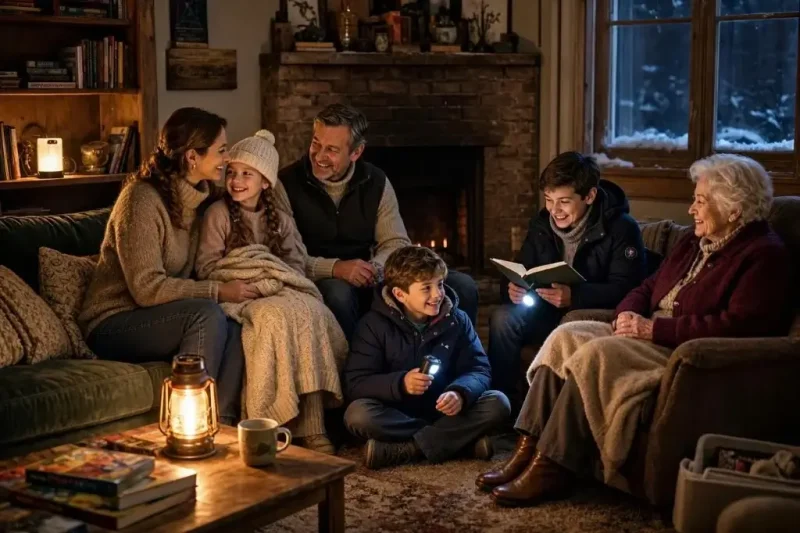
During a winter power outage, conserve heat by closing off unused rooms and gathering in a smaller, comfortable area.
If your normal heating system stops working, your first priority should be staying safely warm.
Start by conserving the heat already inside your home.
Don’t try to heat your home with equipment that isn’t designed for indoor heating.
Never use a gas range or oven to heat your home.
Don’t bring outdoor grills, patio heaters, generators, or camping equipment indoors.
These devices can produce carbon monoxide, an odorless and potentially deadly gas. The CDC specifically warns against using gas ranges or ovens for home heating during power outages.
If your home becomes dangerously cold and you cannot safely restore heat, make arrangements to stay somewhere warm rather than taking risks with improvised heating methods.
If you have electricity from the utility or a properly installed backup system, an electric space heater may provide supplemental heat.
But space heaters can also create fire hazards.
The CDC recommends keeping portable heaters at least 3 feet away from curtains, furniture, bedding, and other combustible materials. Don’t cover a heater, place it on furniture, or use one with a damaged cord.
Follow the manufacturer’s instructions and plug the heater directly into an appropriate outlet unless the manufacturer specifically allows another arrangement.
Never use an electric space heater in a wet area or where it could come into contact with water.
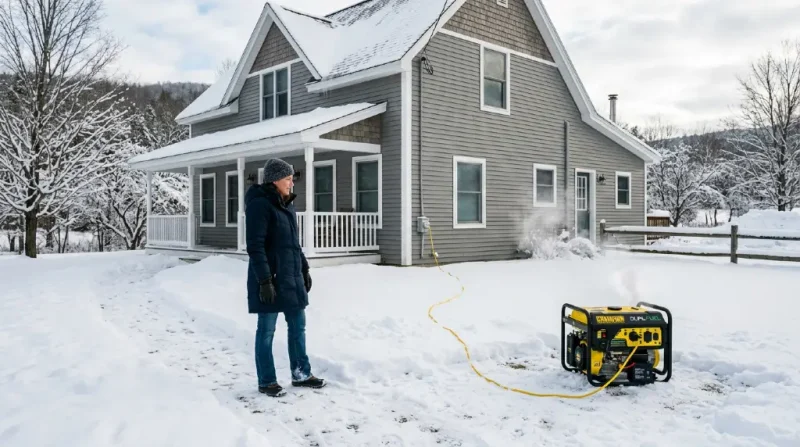
Portable generators must be operated outdoors and away from doors, windows, and vents to reduce the risk of carbon monoxide poisoning.
A portable generator can provide valuable backup electricity during an outage, but improper generator use can be deadly.
Never operate a portable generator inside your home.
That includes:
Opening a garage door or window does not make it safe.
CPSC and CDC guidance says portable generators should be operated outdoors and at least 20 feet away from the house, with exhaust directed away from windows, doors, and vents.
Carbon monoxide can build up rapidly and can cause poisoning before people realize there is a problem.
A generator is designed to produce electricity, not heat your home.
Never run one inside the house because you’re trying to keep it warm.
Also never use:
inside the home.
These devices can produce dangerous carbon monoxide.
Generators and electricity don’t mix well with wet conditions.
Follow the manufacturer’s instructions regarding operation during rain or snow, and protect the generator from moisture without creating an enclosed space that traps exhaust.
Never operate electrical equipment when it is wet unless it is specifically designed for those conditions.
Never attempt to power your home’s electrical system by plugging a generator into a household outlet.
This can create dangerous backfeeding and expose utility workers and others to electrical hazards.
If you want a generator permanently connected to your home’s electrical system, have a qualified electrician install the appropriate transfer equipment.
The Red Cross specifically recommends having an electrician install a power transfer switch when a generator is being permanently connected to house wiring.
If you use a gasoline-powered generator, fuel storage needs to be taken seriously.
Follow the generator and fuel-container manufacturer’s instructions and applicable local requirements.
Keep gasoline and other fuels away from ignition sources and don’t store gasoline inside living areas.
Never refuel a hot or running generator. Shut it down and allow it to cool according to the manufacturer’s instructions before refueling. CPSC specifically warns against refueling a generator while it is running.
A properly installed and maintained fireplace or wood stove can provide heat during an outage, but only if it is designed and approved for that use.
Before winter:
The CDC recommends annual inspection of chimneys or flues when homeowners plan to use fireplaces or wood stoves during winter.
Never burn materials that aren’t intended for your appliance.
And never use a fireplace, wood stove, or other combustion heater that isn’t properly vented to the outside.
One of the easiest mistakes during a power outage is repeatedly opening the refrigerator and freezer to see how cold everything still is.
Keep the doors closed as much as possible.
According to the USDA, an unopened refrigerator generally keeps food cold for about 4 hours. A full standalone freezer can generally maintain its temperature for approximately 48 hours, while a half-full freezer may last about 24 hours, assuming the doors remain closed.
Those timeframes aren’t a guarantee that every individual food item remains safe, so use a food thermometer and follow USDA food-safety guidance when deciding what to keep.
Before winter storms:
USDA recommends having coolers and frozen packs available when an outage may last longer than four hours.
Don’t taste food to determine whether it’s safe. When in doubt about food that has been exposed to unsafe temperatures, throw it out.
If your home uses a private well, a power outage can affect more than your lights.
Most residential well pumps require electricity.
That means you may lose access to running water even though the plumbing itself hasn’t frozen or failed.
Before winter, know:
If you plan to connect a generator to a well pump or other permanently wired equipment, have the electrical work done properly by a qualified electrician.
A sump pump is another system that can become a concern during a power outage.
If your sump pump stops operating, water can accumulate in the sump pit and potentially enter the basement.
Before winter, consider whether your home needs:
Test your existing backup system before you actually need it.
If your basement has a history of water problems, a winter outage is a good reason to make sure your sump system has a reliable backup plan.
An electric water heater won’t operate normally without electricity.
You generally don’t need to do anything dramatic to the water heater simply because the power has gone out.
Avoid opening or tampering with electrical panels or wiring unless you’re qualified to do so.
Once power returns, give the system time to recover according to the manufacturer’s instructions.
If the water heater doesn’t operate normally after power is restored, contact a qualified professional.
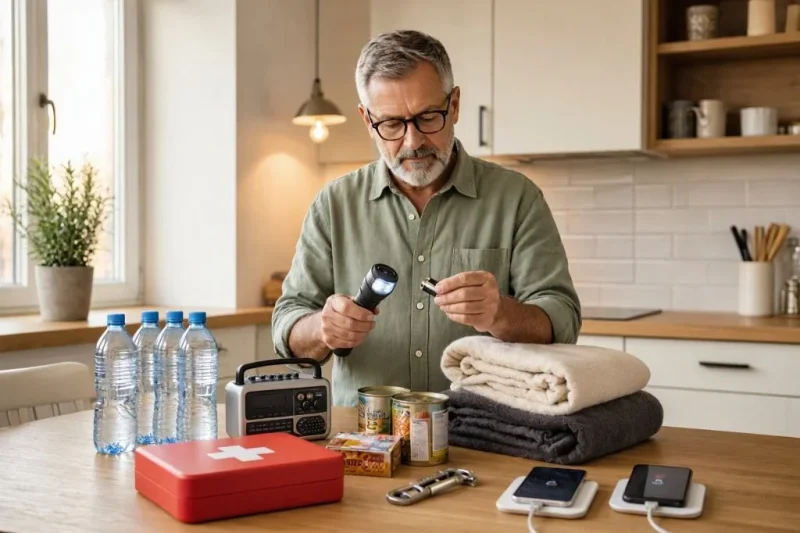
A well-stocked winter power outage emergency kit should provide at least a 3-day to 2-week supply of water, non-perishable food, warmth-preserving gear, and reliable communication tools.
The best way to handle a winter outage is to prepare while everything is still working.
A few days before a major storm is expected:
The CDC recommends preparing your home ahead of winter storms by addressing insulation, water lines, doors and windows, roof problems, and heating-related safety.
If the electricity suddenly goes out during a winter storm, don’t panic.
First, determine whether the outage appears to affect just your home or the surrounding area.
Then:
If you see a downed power line, stay away from it and keep others away. Contact the utility company or emergency services as appropriate.
Never assume a fallen electrical line is safe simply because it isn’t sparking.
If the outage continues and your home is becoming dangerously cold, don’t wait until conditions become an emergency.
Consider relocating to a safe, heated location if one is available.
This may be especially important for:
Winter storms can also make roads dangerous, so don’t wait until the last possible moment if you know your home will not remain safely heated.
When electricity is restored, resist the temptation to immediately turn everything back on.
Power can sometimes fluctuate during restoration.
Check the house first.
Look for:
If you used a generator, turn it off and disconnect equipment according to the manufacturer’s instructions.
Check your refrigerator and freezer temperatures and determine whether any food needs to be discarded.
If your furnace or heating system doesn’t restart normally after power is restored, contact a qualified heating professional rather than repeatedly resetting equipment that isn’t operating correctly.
Some winter outage problems can be handled by a homeowner, but others should be left to professionals.
A winter power outage can reveal problems you didn’t know your home had—from inadequate insulation and vulnerable plumbing to electrical and heating issues.
If you need professional help, browse the HelpHouse Contractor Directory to find local professionals for heating, plumbing, electrical, roofing, and other home improvement projects.
No listings were found matching your selection. Something missing? Why not add a listing?.
Before winter arrives, make sure you’re ready:
☐ Test smoke alarms
☐ Test carbon monoxide alarms
☐ Replace batteries as needed
☐ Locate the home’s main water shutoff
☐ Check vulnerable pipes for adequate insulation
☐ Prepare flashlights and batteries
☐ Charge portable power banks
☐ Stock drinking water
☐ Stock nonperishable food
☐ Keep blankets and warm clothing accessible
☐ Check the furnace or heating system
☐ Check the fireplace or wood stove if applicable
☐ Have the chimney or flue inspected if required
☐ Make sure bathroom and kitchen exhaust vents work properly
☐ Test your sump-pump backup
☐ Check your generator and follow its manufacturer’s maintenance instructions
☐ Store generator fuel safely
☐ Make sure everyone knows generator safety rules
☐ Keep a battery-powered radio available
☐ Know where emergency contacts are located
☐ Make arrangements for pets
☐ Know where you can go if your home becomes dangerously cold
Start by conserving the heat already inside the home. Close doors and windows, limit unnecessary opening of exterior doors, use blankets and warm clothing, and stay together in an appropriate area of the home if practical. Never use a gas oven, outdoor grill, generator, or other equipment that isn’t designed for indoor heating.
How long can a house go without heat before pipes freeze?
There isn’t one reliable time limit that applies to every house. The risk depends on outdoor temperature, how long the outage lasts, insulation, pipe location, construction, and indoor temperature.
Pipes in exterior walls, crawl spaces, garages, and other poorly protected areas can be particularly vulnerable.
If your home is losing heat during an extended winter outage, monitor vulnerable plumbing and take action before temperatures become dangerously low.
Should I shut off my water during a winter power outage?
Not automatically. If your home remains warm enough, shutting off the entire water supply may not be necessary.
However, if your home is becoming dangerously cold and there is a significant risk of frozen pipes, shutting off the main water supply can limit the amount of water released if a pipe bursts. Draining plumbing is a more involved process and may require professional advice depending on the home and plumbing system.
Can I use my gas stove to heat my house during a power outage?
No. Never use a gas range or oven to heat your home. Fuel-burning appliances can produce carbon monoxide, and using them for heating creates a serious safety risk.
Can I run a generator in my garage if the garage door is open?
No. Opening a garage door does not make generator operation safe.
Portable generators must be operated outdoors, at least 20 feet from the house, with exhaust directed away from windows, doors, and vents.
How far should a portable generator be from my house?
Current CDC and CPSC guidance recommends operating portable generators at least 20 feet from the house, with the exhaust directed away from the home and openings such as windows, doors, and vents.
Always follow the generator manufacturer’s instructions as well.
How long will food stay safe during a power outage?
An unopened refrigerator generally keeps food cold for about four hours. A full standalone freezer can generally maintain its temperature for about 48 hours, while a half-full freezer may last approximately 24 hours. Keep doors closed as much as possible and use a food thermometer when evaluating food safety.
What should I do if my furnace doesn’t work after the power comes back?
Check whether the furnace has power and whether an obvious breaker has tripped, but don’t repeatedly reset equipment that isn’t operating correctly. If the furnace doesn’t restart normally or you notice unusual smells, noises, or other problems, contact a qualified heating professional.
What if my power outage causes a pipe to burst?
If it is safe to do so, shut off the home’s main water supply immediately to limit additional water damage. Then contact a plumber.
If water is near electrical outlets, appliances, wiring, or electrical equipment, stay away from the water and address the electrical hazard safely.
A winter power outage is much easier to handle when you have prepared for it before the first major storm arrives.
The most important steps are straightforward: have emergency supplies available, know where your main water shutoff is, protect vulnerable pipes, maintain your heating system, test smoke and carbon monoxide alarms, and understand how to use backup equipment safely.
If you have a generator, know the safety rules before the power goes out. A generator can provide valuable backup electricity, but it can also produce deadly carbon monoxide if operated incorrectly.
And if your home becomes dangerously cold, don’t try to improvise a heating solution. Move to a safe, heated location if necessary.
A few hours of preparation in the fall can make a major difference when a winter storm leaves your neighborhood without power.
No listings were found matching your selection. Something missing? Why not add a listing?.
Continue preparing your home for colder weather with:
Help homeowners find your business by listing your company in the HelpHouse Contractor Directory.
The post How to Prepare Your Home for a Winter Power Outage appeared first on HelpHouse.com DIY Home Repairs and Maintenance and Contractor Directory.
Winter storms can knock out power because of heavy snow, ice, high winds, falling trees, and damage to electrical equipment. Preparing before the storm arrives gives you more options if the lights go out and the temperature starts dropping.
The best time to prepare for a winter power outage is before you need to.
Here’s how to get your home ready, protect your plumbing and heating system, use backup equipment safely, and know what to do if the power actually goes out.
Why Winter Power Outages Are Different
A power outage during mild weather may be inconvenient, but a winter outage can create additional problems.
If the power remains off long enough for your home to become very cold, plumbing can freeze. A frozen pipe can eventually burst, potentially causing significant water damage when it thaws.
You may also lose your furnace or heat pump, depending on how your heating system operates. Electric space heaters won’t work without electricity, and fuel-burning equipment can create serious carbon-monoxide and fire hazards if used incorrectly.
Winter outages can also affect:
- Refrigerators and freezers
- Well pumps
- Sump pumps
- Medical equipment
- Internet and communications
- Security systems
- Garage doors
- Electric water heaters
- Electric ranges
- Lighting
The CDC recommends preparing your home and supplies before winter storms because they can bring power failures, loss of communications, dangerous cold, and difficult travel conditions.
Prepare a Winter Emergency Kit
A well-stocked emergency kit can make a winter power outage much easier to manage.
Don’t wait until a winter storm is approaching to discover that your flashlights don’t work or your phone power bank is empty.
Keep basic emergency supplies in a location that’s easy to access even if the house is dark.
Your winter outage supplies should include:
- Flashlights or battery-powered lanterns
- Extra batteries
- Battery-powered or hand-crank radio
- Portable phone power banks
- Charging cables
- Blankets and sleeping bags
- Warm clothing
- Drinking water
- Nonperishable food
- Manual can opener
- First-aid supplies
- Necessary medications
- Basic tools
- Pet food and supplies
- Baby supplies if needed
- Emergency contact information
- Copies of important information or documents
A battery-powered radio can be particularly useful when internet and cellular service are disrupted.
Keep flashlights where you can find them easily rather than buried in a closet or basement.
Make Sure Your Smoke and Carbon Monoxide Alarms Work
Working smoke and carbon monoxide alarms are especially important during a winter power outage.
If you use a furnace, fireplace, wood stove, generator, or other fuel-burning equipment, carbon monoxide can become a serious hazard if equipment is improperly installed, maintained, vented, or used.
Before winter:
- Test smoke alarms
- Test carbon monoxide alarms
- Replace batteries when necessary
- Make sure alarms have battery backup
- Keep alarms on every level where appropriate
- Keep carbon monoxide alarms outside sleeping areas
CPSC recommends working smoke and carbon monoxide alarms, including battery-operated or battery-backup models that can continue operating when the electricity is out.
Never ignore a carbon monoxide alarm. If it sounds, get outside to fresh air and call 911 or your local emergency services.
Know Where Your Main Water Shutoff Is
This is one of the most important things to know before a winter outage.
If your house becomes cold enough for a pipe to freeze and burst, knowing where the main water shutoff is can help you stop the flow of water quickly and limit damage.
The main shutoff is commonly located where the main water line enters the house, such as:
- A basement
- Crawl space
- Utility room
- Garage
- Mechanical room
- Near the water heater
The location varies from house to house.
Find it before an emergency happens.
Make sure the valve is accessible and that everyone in the household knows where it is.
If you’re unsure which valve shuts off the water to the entire house, ask a plumber to identify it.
Find Local Plumbers Near Me
Protect Your Pipes During a Winter Power Outage
Frozen pipes are one of the biggest concerns when a winter outage leaves a home without heat.
The risk depends on factors such as outdoor temperature, how long the heat remains off, the home’s insulation, where pipes are located, and whether pipes run through vulnerable areas.
Pay particular attention to plumbing in:
- Exterior walls
- Unheated crawl spaces
- Garages
- Basements
- Attics
- Areas near exterior doors
- Other poorly insulated locations
If the power goes out but your home is still warm, keep doors and windows closed as much as possible to conserve heat.
Open cabinet doors beneath sinks when appropriate, particularly where plumbing is located against exterior walls, so warmer household air can reach the pipes.
If temperatures are expected to remain extremely cold, monitor vulnerable plumbing closely.
For a more detailed guide, see:
How to Prevent Frozen Pipes This Winter (and What to Do If They Freeze)
If a pipe freezes and then bursts, shut off the home’s main water supply immediately if it is safe to do so and contact a plumber.
How to Keep Your Home Warm During a Power Outage
During a winter power outage, conserve heat by closing off unused rooms and gathering in a smaller, comfortable area.
If your normal heating system stops working, your first priority should be staying safely warm.
Start by conserving the heat already inside your home.
- Close exterior doors and windows.
- Keep curtains or blinds closed when appropriate.
- Avoid opening doors unnecessarily.
- Close off unused areas if doing so makes sense for your home’s heating situation.
- Dress in warm layers.
- Use blankets and sleeping bags.
- Gather household members in a comfortable, safe area if appropriate.
Don’t try to heat your home with equipment that isn’t designed for indoor heating.
Never use a gas range or oven to heat your home.
Don’t bring outdoor grills, patio heaters, generators, or camping equipment indoors.
These devices can produce carbon monoxide, an odorless and potentially deadly gas. The CDC specifically warns against using gas ranges or ovens for home heating during power outages.
If your home becomes dangerously cold and you cannot safely restore heat, make arrangements to stay somewhere warm rather than taking risks with improvised heating methods.
Use Portable Space Heaters Safely
If you have electricity from the utility or a properly installed backup system, an electric space heater may provide supplemental heat.
But space heaters can also create fire hazards.
The CDC recommends keeping portable heaters at least 3 feet away from curtains, furniture, bedding, and other combustible materials. Don’t cover a heater, place it on furniture, or use one with a damaged cord.
Follow the manufacturer’s instructions and plug the heater directly into an appropriate outlet unless the manufacturer specifically allows another arrangement.
Never use an electric space heater in a wet area or where it could come into contact with water.
Generator Safety: The Most Important Rules
Portable generators must be operated outdoors and away from doors, windows, and vents to reduce the risk of carbon monoxide poisoning.
A portable generator can provide valuable backup electricity during an outage, but improper generator use can be deadly.
Never operate a portable generator inside your home.
That includes:
- The basement
- Garage
- Shed
- Crawl space
- Enclosed porch
- Other enclosed or partially enclosed areas
Opening a garage door or window does not make it safe.
CPSC and CDC guidance says portable generators should be operated outdoors and at least 20 feet away from the house, with exhaust directed away from windows, doors, and vents.
Carbon monoxide can build up rapidly and can cause poisoning before people realize there is a problem.
Never use a generator indoors for heat
A generator is designed to produce electricity, not heat your home.
Never run one inside the house because you’re trying to keep it warm.
Also never use:
- Charcoal grills
- Gasoline-powered equipment
- Camping stoves
- Outdoor propane heaters
- Other fuel-burning outdoor equipment
inside the home.
These devices can produce dangerous carbon monoxide.
Keep the generator dry
Generators and electricity don’t mix well with wet conditions.
Follow the manufacturer’s instructions regarding operation during rain or snow, and protect the generator from moisture without creating an enclosed space that traps exhaust.
Never operate electrical equipment when it is wet unless it is specifically designed for those conditions.
Don’t connect a portable generator directly to household wiring
Never attempt to power your home’s electrical system by plugging a generator into a household outlet.
This can create dangerous backfeeding and expose utility workers and others to electrical hazards.
If you want a generator permanently connected to your home’s electrical system, have a qualified electrician install the appropriate transfer equipment.
The Red Cross specifically recommends having an electrician install a power transfer switch when a generator is being permanently connected to house wiring.
Keep Generator Fuel Safe
If you use a gasoline-powered generator, fuel storage needs to be taken seriously.
Follow the generator and fuel-container manufacturer’s instructions and applicable local requirements.
Keep gasoline and other fuels away from ignition sources and don’t store gasoline inside living areas.
Never refuel a hot or running generator. Shut it down and allow it to cool according to the manufacturer’s instructions before refueling. CPSC specifically warns against refueling a generator while it is running.
What About Your Fireplace or Wood Stove?
A properly installed and maintained fireplace or wood stove can provide heat during an outage, but only if it is designed and approved for that use.
Before winter:
- Have the chimney or flue inspected as appropriate.
- Make sure the appliance is properly vented.
- Keep the manufacturer’s instructions available.
- Keep appropriate firewood or fuel available.
- Make sure smoke and carbon monoxide alarms work.
The CDC recommends annual inspection of chimneys or flues when homeowners plan to use fireplaces or wood stoves during winter.
Never burn materials that aren’t intended for your appliance.
And never use a fireplace, wood stove, or other combustion heater that isn’t properly vented to the outside.
What Happens to Your Refrigerator During a Power Outage?
One of the easiest mistakes during a power outage is repeatedly opening the refrigerator and freezer to see how cold everything still is.
Keep the doors closed as much as possible.
According to the USDA, an unopened refrigerator generally keeps food cold for about 4 hours. A full standalone freezer can generally maintain its temperature for approximately 48 hours, while a half-full freezer may last about 24 hours, assuming the doors remain closed.
Those timeframes aren’t a guarantee that every individual food item remains safe, so use a food thermometer and follow USDA food-safety guidance when deciding what to keep.
Before winter storms:
- Keep an appliance thermometer in the refrigerator.
- Keep one in the freezer.
- Know where your coolers are.
- Keep frozen gel packs available.
- Freeze containers of water ahead of time if you have room.
- Keep some nonperishable food available.
USDA recommends having coolers and frozen packs available when an outage may last longer than four hours.
Don’t taste food to determine whether it’s safe. When in doubt about food that has been exposed to unsafe temperatures, throw it out.
What If You Have a Well?
If your home uses a private well, a power outage can affect more than your lights.
Most residential well pumps require electricity.
That means you may lose access to running water even though the plumbing itself hasn’t frozen or failed.
Before winter, know:
- Where your well equipment is located
- Whether your well pump has backup power
- Whether your generator can safely power the required equipment
- How much water you have available during an outage
If you plan to connect a generator to a well pump or other permanently wired equipment, have the electrical work done properly by a qualified electrician.
What If You Have a Sump Pump?
A sump pump is another system that can become a concern during a power outage.
If your sump pump stops operating, water can accumulate in the sump pit and potentially enter the basement.
Before winter, consider whether your home needs:
- A battery backup sump pump
- A secondary sump pump
- A properly installed generator connection
- A high-water alarm
Test your existing backup system before you actually need it.
If your basement has a history of water problems, a winter outage is a good reason to make sure your sump system has a reliable backup plan.
What About Your Electric Water Heater?
An electric water heater won’t operate normally without electricity.
You generally don’t need to do anything dramatic to the water heater simply because the power has gone out.
Avoid opening or tampering with electrical panels or wiring unless you’re qualified to do so.
Once power returns, give the system time to recover according to the manufacturer’s instructions.
If the water heater doesn’t operate normally after power is restored, contact a qualified professional.
How to Prepare Before a Winter Storm
A well-stocked winter power outage emergency kit should provide at least a 3-day to 2-week supply of water, non-perishable food, warmth-preserving gear, and reliable communication tools.
The best way to handle a winter outage is to prepare while everything is still working.
A few days before a major storm is expected:
- Charge phones and power banks.
- Test flashlights.
- Check batteries.
- Test smoke and CO alarms.
- Make sure emergency supplies are accessible.
- Check your heating system.
- Confirm that vulnerable pipes are insulated.
- Locate the main water shutoff.
- Make sure gutters and downspouts are clear.
- Check that outdoor equipment is safely stored.
- Make sure your generator is maintained.
- Check your generator’s fuel situation.
- Test your sump-pump backup.
- Stock drinking water and nonperishable food.
- Check on elderly or vulnerable family members if appropriate.
- Make sure pets have food and water.
- Monitor weather and utility information.
The CDC recommends preparing your home ahead of winter storms by addressing insulation, water lines, doors and windows, roof problems, and heating-related safety.
What to Do When the Power Goes Out
If the electricity suddenly goes out during a winter storm, don’t panic.
First, determine whether the outage appears to affect just your home or the surrounding area.
Then:
- Check your electrical panel for an obvious tripped breaker if it is safe to do so.
- Check your utility company’s outage information.
- Use flashlights rather than candles whenever possible.
- Unplug sensitive electronics if appropriate to protect them from potential surges when power returns.
- Keep refrigerator and freezer doors closed.
- Conserve heat.
- Monitor the temperature inside your home.
- Protect vulnerable plumbing.
- Use generators and other backup equipment only as directed.
- Monitor weather and emergency information.
If you see a downed power line, stay away from it and keep others away. Contact the utility company or emergency services as appropriate.
Never assume a fallen electrical line is safe simply because it isn’t sparking.
What to Do If the Power Is Out for an Extended Period
If the outage continues and your home is becoming dangerously cold, don’t wait until conditions become an emergency.
Consider relocating to a safe, heated location if one is available.
This may be especially important for:
- Infants
- Older adults
- People with certain medical needs
- People who have difficulty regulating body temperature
- Anyone using electrically powered medical equipment
Winter storms can also make roads dangerous, so don’t wait until the last possible moment if you know your home will not remain safely heated.
What to Do When the Power Comes Back
When electricity is restored, resist the temptation to immediately turn everything back on.
Power can sometimes fluctuate during restoration.
Check the house first.
Look for:
- Water leaks
- Burst pipes
- Electrical damage
- Damaged appliances
- Furnace problems
- Unusual smells
- Tripped breakers
- Frozen plumbing
- Basement water
If you used a generator, turn it off and disconnect equipment according to the manufacturer’s instructions.
Check your refrigerator and freezer temperatures and determine whether any food needs to be discarded.
If your furnace or heating system doesn’t restart normally after power is restored, contact a qualified heating professional rather than repeatedly resetting equipment that isn’t operating correctly.
When to Call a Professional
Some winter outage problems can be handled by a homeowner, but others should be left to professionals.
Call an electrician if:
- You need a generator transfer switch installed.
- You need backup power connected to household wiring.
- You see damaged wiring.
- You smell burning from electrical equipment.
- Breakers repeatedly trip.
- Electrical equipment was damaged by water.
- You’re unsure whether a generator can safely power a particular appliance.
Call a plumber if:
- A pipe has frozen.
- A pipe has burst.
- You discover a water leak.
- Your plumbing remains frozen after the outage.
- You aren’t sure how to shut off the home’s main water supply.
- Your home has significant water damage.
Call a heating professional if:
- Your furnace won’t restart after power returns.
- The heating system is making unusual noises.
- You smell gas.
- The furnace repeatedly shuts down.
- Your heating system has been damaged.
Need Help After a Winter Power Outage?
A winter power outage can reveal problems you didn’t know your home had—from inadequate insulation and vulnerable plumbing to electrical and heating issues.
If you need professional help, browse the HelpHouse Contractor Directory to find local professionals for heating, plumbing, electrical, roofing, and other home improvement projects.
No listings were found matching your selection. Something missing? Why not add a listing?.
Winter Power Outage Checklist
Before winter arrives, make sure you’re ready:
☐ Test smoke alarms
☐ Test carbon monoxide alarms
☐ Replace batteries as needed
☐ Locate the home’s main water shutoff
☐ Check vulnerable pipes for adequate insulation
☐ Prepare flashlights and batteries
☐ Charge portable power banks
☐ Stock drinking water
☐ Stock nonperishable food
☐ Keep blankets and warm clothing accessible
☐ Check the furnace or heating system
☐ Check the fireplace or wood stove if applicable
☐ Have the chimney or flue inspected if required
☐ Make sure bathroom and kitchen exhaust vents work properly
☐ Test your sump-pump backup
☐ Check your generator and follow its manufacturer’s maintenance instructions
☐ Store generator fuel safely
☐ Make sure everyone knows generator safety rules
☐ Keep a battery-powered radio available
☐ Know where emergency contacts are located
☐ Make arrangements for pets
☐ Know where you can go if your home becomes dangerously cold
Frequently Asked Questions About Winter Power Outages
How do I keep my house warm during a winter power outage?Start by conserving the heat already inside the home. Close doors and windows, limit unnecessary opening of exterior doors, use blankets and warm clothing, and stay together in an appropriate area of the home if practical. Never use a gas oven, outdoor grill, generator, or other equipment that isn’t designed for indoor heating.
How long can a house go without heat before pipes freeze?
There isn’t one reliable time limit that applies to every house. The risk depends on outdoor temperature, how long the outage lasts, insulation, pipe location, construction, and indoor temperature.
Pipes in exterior walls, crawl spaces, garages, and other poorly protected areas can be particularly vulnerable.
If your home is losing heat during an extended winter outage, monitor vulnerable plumbing and take action before temperatures become dangerously low.
Should I shut off my water during a winter power outage?
Not automatically. If your home remains warm enough, shutting off the entire water supply may not be necessary.
However, if your home is becoming dangerously cold and there is a significant risk of frozen pipes, shutting off the main water supply can limit the amount of water released if a pipe bursts. Draining plumbing is a more involved process and may require professional advice depending on the home and plumbing system.
Can I use my gas stove to heat my house during a power outage?
No. Never use a gas range or oven to heat your home. Fuel-burning appliances can produce carbon monoxide, and using them for heating creates a serious safety risk.
Can I run a generator in my garage if the garage door is open?
No. Opening a garage door does not make generator operation safe.
Portable generators must be operated outdoors, at least 20 feet from the house, with exhaust directed away from windows, doors, and vents.
How far should a portable generator be from my house?
Current CDC and CPSC guidance recommends operating portable generators at least 20 feet from the house, with the exhaust directed away from the home and openings such as windows, doors, and vents.
Always follow the generator manufacturer’s instructions as well.
How long will food stay safe during a power outage?
An unopened refrigerator generally keeps food cold for about four hours. A full standalone freezer can generally maintain its temperature for about 48 hours, while a half-full freezer may last approximately 24 hours. Keep doors closed as much as possible and use a food thermometer when evaluating food safety.
What should I do if my furnace doesn’t work after the power comes back?
Check whether the furnace has power and whether an obvious breaker has tripped, but don’t repeatedly reset equipment that isn’t operating correctly. If the furnace doesn’t restart normally or you notice unusual smells, noises, or other problems, contact a qualified heating professional.
What if my power outage causes a pipe to burst?
If it is safe to do so, shut off the home’s main water supply immediately to limit additional water damage. Then contact a plumber.
If water is near electrical outlets, appliances, wiring, or electrical equipment, stay away from the water and address the electrical hazard safely.
Final Thoughts on Preparing Your Home for a Winter Power Outage
A winter power outage is much easier to handle when you have prepared for it before the first major storm arrives.
The most important steps are straightforward: have emergency supplies available, know where your main water shutoff is, protect vulnerable pipes, maintain your heating system, test smoke and carbon monoxide alarms, and understand how to use backup equipment safely.
If you have a generator, know the safety rules before the power goes out. A generator can provide valuable backup electricity, but it can also produce deadly carbon monoxide if operated incorrectly.
And if your home becomes dangerously cold, don’t try to improvise a heating solution. Move to a safe, heated location if necessary.
A few hours of preparation in the fall can make a major difference when a winter storm leaves your neighborhood without power.
No listings were found matching your selection. Something missing? Why not add a listing?.
More Fall and Winter Home Maintenance
Continue preparing your home for colder weather with:
- How to Prepare Your Home for Colder Weather: 15 Things to Do Before Winter
- How to Prepare Your Furnace for Winter
- How to Prevent Frozen Pipes This Winter (and What to Do If They Freeze)
- How to Improve Your Home’s Insulation Before Winter
- How to Prevent Ice Dams on Your Roof This Winter
- How to Winterize Outdoor Faucets Before Freezing Weather
- Winter Home Fire and Heating Safety: How to Protect Your Home
Are you a contractor?
Help homeowners find your business by listing your company in the HelpHouse Contractor Directory.
The post How to Prepare Your Home for a Winter Power Outage appeared first on HelpHouse.com DIY Home Repairs and Maintenance and Contractor Directory.